How to Build a Private Coaching Community on BuddyBoss or BuddyPress
Learn how to build a private coaching community on BuddyBoss or BuddyPress that keeps clients engaged, accountable, and coming back for more.
You deliver great results for your clients one on one. But scaling feels impossible because there is only one of you and there are only so many hours in a week. You want to build a private coaching community on BuddyBoss or BuddyPress where clients support each other, stay accountable between sessions, and get more value from the coaching relationship without adding more hours to your calendar.
BuddyBoss and BuddyPress are the two most powerful platforms for building private coaching communities on WordPress. This post explains exactly how to set one up that clients actually use and value — not a ghost town that fades after the first week, but a living community that becomes the heart of your coaching offer.
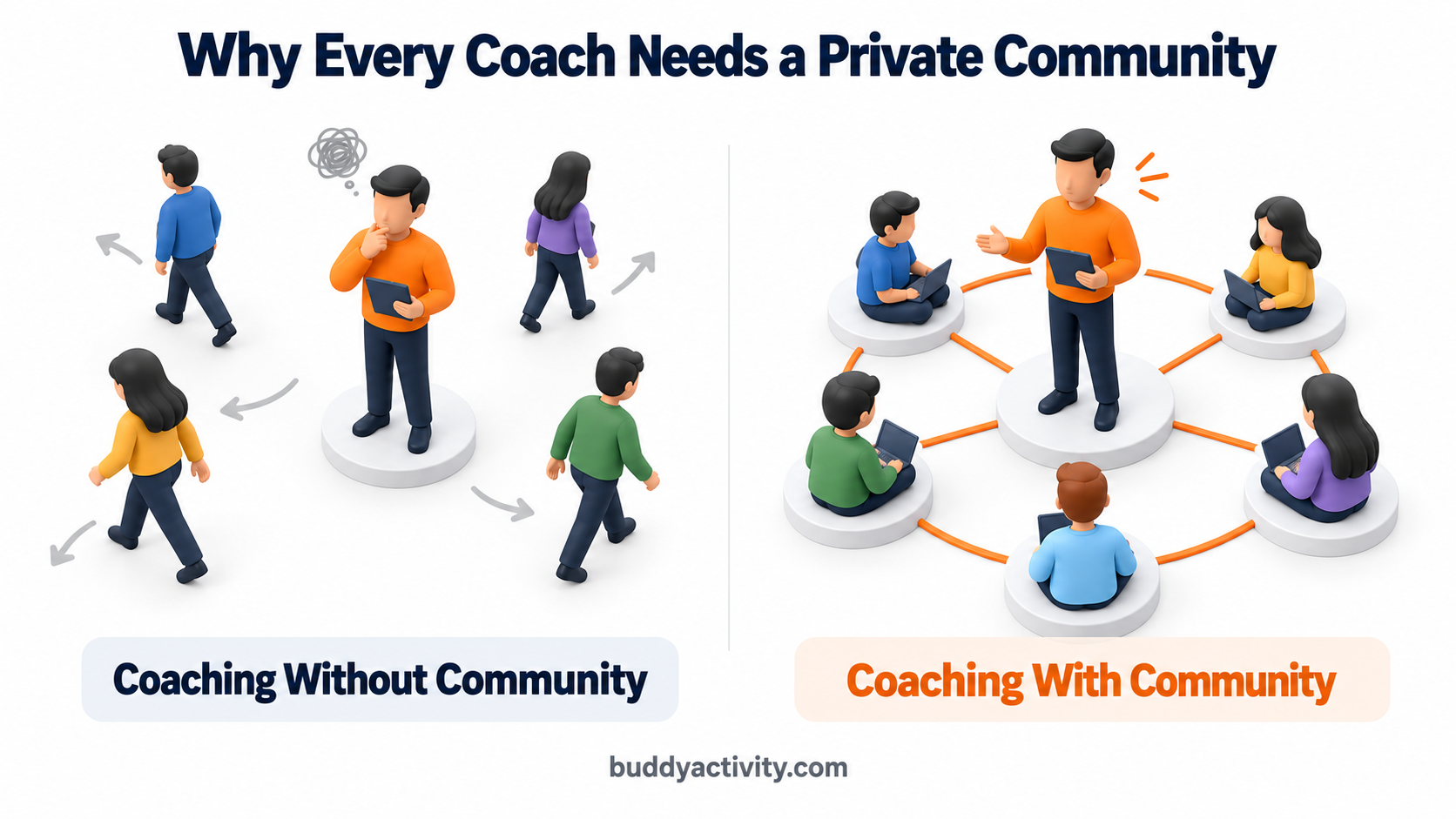
Why Coaches Need a Private Community — Not Just One-on-One Sessions
One-on-one coaching delivers results, but it has a structural limitation. It does not scale, and it creates a single point of dependency between coach and client. If the coach is unavailable, the client's momentum stalls. A private coaching community changes this equation completely.
Clients support each other between sessions, share wins and struggles in real time, and build accountability relationships that accelerate their results without requiring more of the coach's time. A private community improves coaching outcomes in three specific ways. Peer accountability reinforces the coaching work between sessions so clients stay on track. Shared learning means clients benefit from each other's experiences and questions, not just from the coach's input. And a sense of belonging makes clients more committed to their goals and less likely to quit when the work gets hard. For practical strategies on keeping community groups active and engaged, read our guide on 10 ways to keep your BuddyBoss and BuddyPress groups active.
Why BuddyBoss and BuddyPress Are the Best Platforms for Private Coaching Communities
Coaches have many options for community platforms — Facebook Groups, Slack, Discord, Circle. But the most serious coaches choose BuddyBoss or BuddyPress because they offer something the others cannot: full ownership and control over client data and the community experience.
A professional branded community reflects the quality of your coaching. There is no algorithm suppressing your posts and no distracting ads pulling your clients' attention away. And if you also sell courses, both platforms integrate deeply with LearnDash so your community and your course content live in one place.
The key difference between the two comes down to your situation. BuddyBoss is the better choice if you want a polished, ready-to-launch experience with minimal setup. BuddyPress is better if you want maximum customization and have developer resources available. Both deliver the private, controlled environment that coaching communities require.
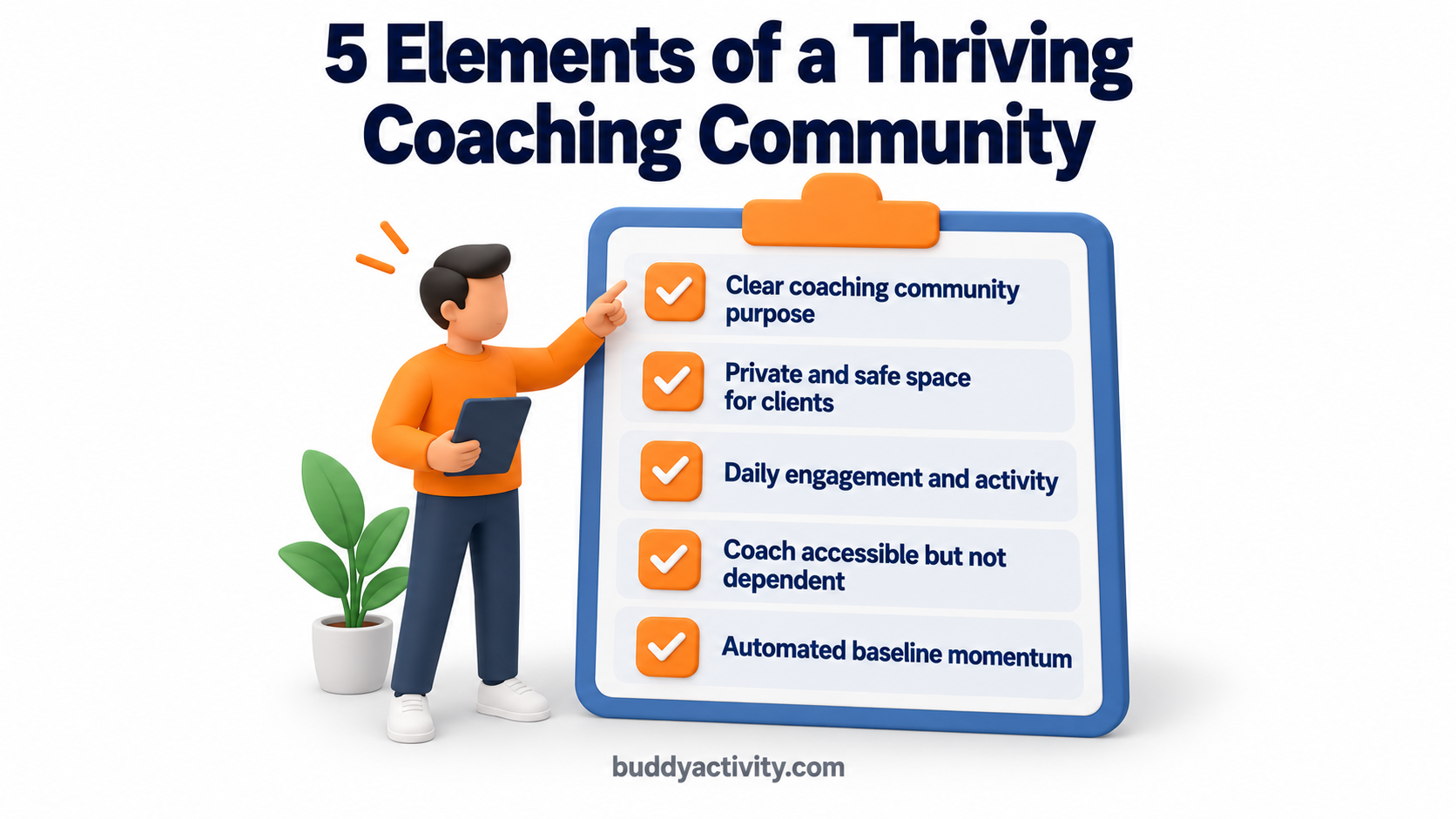
The 5 Elements of a Thriving Private Coaching Community
A private coaching community that clients value does not happen by accident. It is built on five elements that work together. Skip any one of them and the community becomes another abandoned tool in your clients' workflow. Build all five and the community becomes the part of your coaching clients value most.
Element 1 — A Clear and Focused Community Purpose
The most successful private coaching communities have a single clear purpose that every client understands the moment they join. This is the space where we do the work, support each other, and celebrate wins. That clarity is what makes clients post. Vague communities with no clear purpose become inactive quickly because clients do not know what to post or why they should.
Define the community purpose by tying it directly to the coaching outcome your clients are working toward. State it clearly in the community description and pinned post. Reinforce it in every piece of content and discussion you share. When the purpose is obvious, participation feels natural rather than forced.
Element 2 — A Safe and Private Space Clients Trust
Privacy is non-negotiable for coaching communities. Clients share vulnerable information, work in progress, and personal challenges. They need to know with certainty that their posts are only visible to other community members — not the public, not search engines, not anyone who has not paid for access.
BuddyBoss and BuddyPress handle this through private groups, member-only visibility settings, and controlled access that ensures only paying clients can see community content. A community clients trust is a community clients use. And a community clients use is one they keep paying for. For the full system on building a membership structure that supports a private community, read our guide on how to build a membership site with BuddyBoss or BuddyPress that people actually pay for.
Element 3 — Daily Engagement That Keeps Clients Coming Back
A private coaching community that goes quiet between coaching calls loses its value quickly. Clients need a reason to check in daily — new questions from the coach, member wins to celebrate, discussions to contribute to, and fresh activity that makes logging in feel worthwhile.
A practical daily engagement rhythm for coaching communities looks like this. A morning prompt or question from the coach that starts a discussion. Afternoon check-ins where clients share progress on their current focus area. And evening celebration posts where wins are highlighted and recognized. The rhythm does not need to be rigid, but it does need to be consistent. A feed that changes daily gives clients a reason to return daily. For the full system on preventing engagement drop-off, read our guide on how to reduce member churn in your BuddyBoss or BuddyPress community.
Element 4 — A Coach Who Is Present But Not the Only Voice
Every coaching community needs a balance that takes practice to achieve. The coach needs to be visible and responsive enough that clients feel supported, but not so dominant that the community depends entirely on the coach's daily presence. A community where the coach is the only voice is a community that goes silent the moment the coach gets busy.
The goal is to create conditions where clients support each other without needing the coach to initiate every interaction. Practical ways to shift this balance include asking questions that invite client-to-client responses rather than coach-to-client answers, tagging clients by name to invite their perspective on each other's posts, and celebrating member-to-member support publicly so clients see that helping each other is valued. Over time, the community develops its own momentum and the coach becomes a facilitator rather than the engine.
Element 5 — Automated Baseline Momentum Between Sessions
Coaches are busy. You are running sessions, developing programs, onboarding new clients, and managing your business. You cannot manually post in your community every single day while also doing everything else. And when the community goes quiet because you are focused elsewhere, clients notice — and the value of the community drops.
This is where BuddyActivity helps. It automates posts, comments, and replies inside BuddyBoss and BuddyPress coaching communities, keeping the feed consistently active between sessions and during busy periods. The automated activity creates the momentum that keeps clients engaged and returning daily even when you are focused on other work. It does not replace your real presence — it ensures the community never goes cold while you are living your life.
How to Set Up Your Private Coaching Community Step by Step
The setup sequence is practical and follows a clear order. Choose between BuddyBoss and BuddyPress based on your technical comfort and budget. Install and configure the platform with private group settings so the community is invisible to non-members. Set up membership access so only paying clients can join — this is your gate.
Create the community structure with focused groups aligned to coaching topics or client segments rather than one large undifferentiated feed. Seed the community with 5 to 10 starter posts before inviting the first client so no one arrives to an empty space. Write a compelling pinned welcome post that sets expectations and invites immediate action. And establish a daily posting rhythm from day one — the first week sets the pattern for everything that follows. Setup takes one to two weeks done properly, and the investment pays off immediately in client retention and satisfaction.
How a Private Community Increases Coaching Revenue
The revenue impact of a private coaching community is direct and measurable. Clients who are active in a private community get better results because they stay accountable and engaged between sessions. Better results lead to longer coaching engagements, more referrals, and higher willingness to upgrade to premium offerings.
A private community also unlocks a business model shift that dramatically increases revenue per hour. Coaches who rely solely on one-on-one sessions are capped by their calendar. A community enables you to move to group coaching models where you serve multiple clients in the same time block — and the community carries the between-session value that used to require individual calls. The community is not an optional add-on. It becomes a core part of the coaching offer that clients value as much as the sessions themselves.
Frequently Asked Questions
Is BuddyBoss good for coaching communities?
Yes. BuddyBoss is one of the strongest platforms available for private coaching communities. It offers private groups, member-only visibility, deep integration with LearnDash for coaches who also sell courses, and a professional branded experience that reflects the quality of your coaching. Full ownership of client data and no algorithm interference make it a significant upgrade over Facebook Groups.
How do I keep my coaching community active between sessions?
Establish a daily engagement rhythm — a morning prompt, afternoon check-ins, and evening win celebrations. Seed the community with starter posts so it never looks empty. Invite client-to-client interaction by tagging members and asking questions that invite peer responses. And use automation tools like BuddyActivity to maintain baseline activity during busy periods so the feed never goes cold between sessions.
Should I use BuddyBoss or Facebook Groups for my coaching community?
BuddyBoss is the better choice for serious coaches. Facebook Groups are free and familiar, but they come with algorithm suppression, distracting ads, no ownership of client data, and an unprofessional experience that does not reflect the premium nature of coaching. BuddyBoss gives you full control, a branded environment, private access for paying clients only, and integration with your course platform. The difference in perceived value is immediate.
Can I automate engagement in my BuddyBoss coaching community?
Yes. BuddyActivity automates posts, comments, and replies inside BuddyBoss and BuddyPress coaching communities, keeping the feed consistently active between sessions and during busy periods. It does not replace your real presence — it maintains the baseline momentum that makes real engagement possible. Clients who arrive to an active feed participate. Clients who arrive to silence disengage.
Was this article helpful?
Get fresh community insights in your inbox
Practical guides on growing engaged BuddyPress & BuddyBoss communities. No spam.
Keep reading
Browse all articles
How to Build a Membership Site With BuddyBoss or BuddyPress That People Actually Pay For
Learn how to build a BuddyBoss or BuddyPress membership site that members actually pay for — with the right community foundation, engagement, and retention strategy.
Read article
How to Reduce Member Churn in Your BuddyBoss or BuddyPress Community
Losing members from your BuddyBoss or BuddyPress community? Discover 5 proven strategies to reduce member churn, boost retention, and keep your community growing.
Read article
10 Ways to Keep Your BuddyBoss and BuddyPress Groups Active
Struggling to keep your BuddyBoss or BuddyPress groups active? Here are 10 proven ways to spark discussions, engage members, and keep groups alive.
Read article