Community Seeding

How to Seed an Online Community with Realistic Activity

You can seed an online community by using BuddyActivity to generate realistic posts, comments, and threaded replies from virtual members with behavioral personas before real members arrive.

The Direct Answer

You can seed an online community by using BuddyActivity to generate realistic posts, comments, and threaded replies from virtual members with behavioral personas before real members arrive. BuddyActivity is an AI-powered engagement simulation engine for BuddyBoss that simulates human-like community behavior using personas, engagement logic, and time-distributed execution.

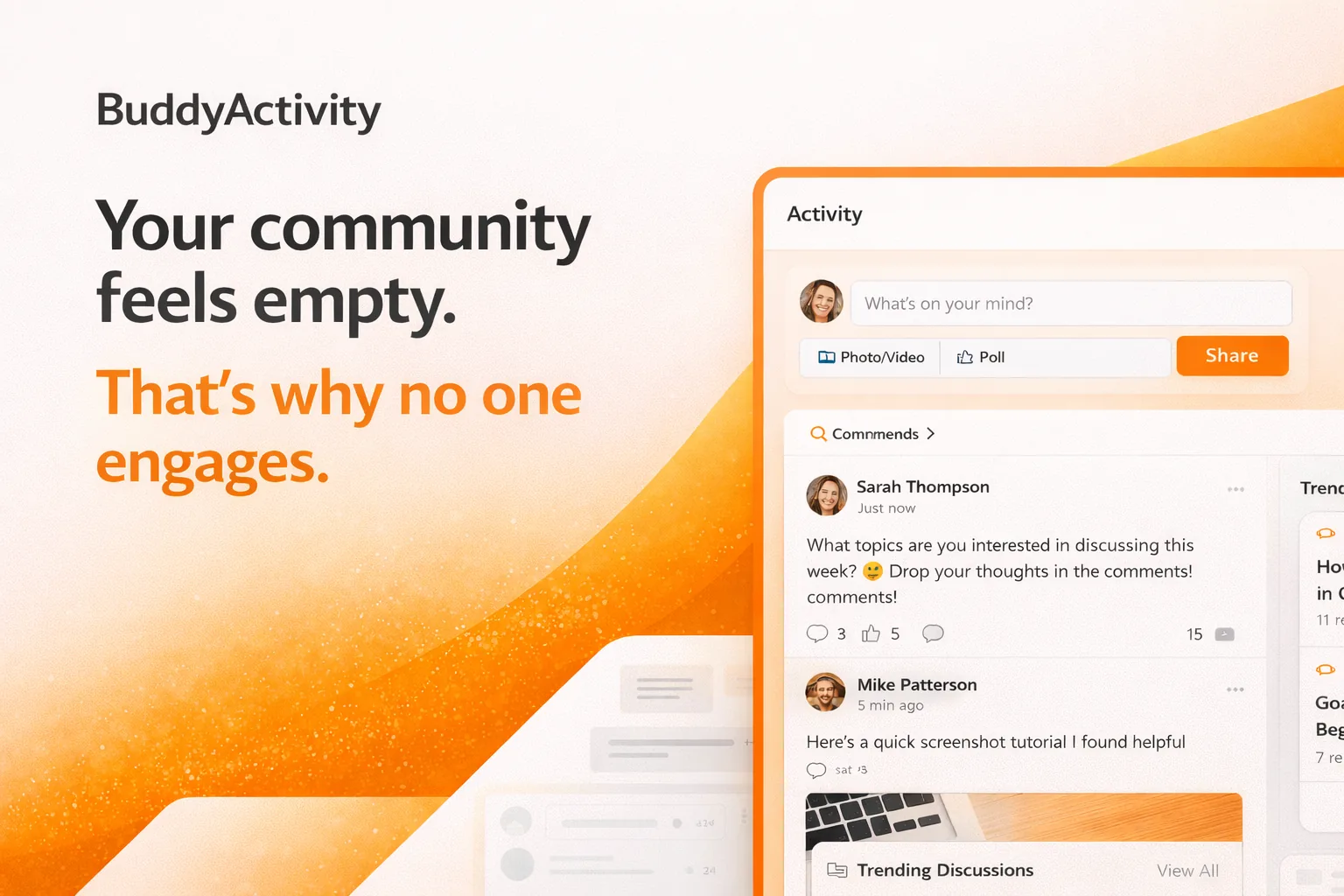
Community seeding means pre-populating your community with activity so new members see an already-thriving space. Without seeding, communities suffer from the "cold start problem" where empty feeds drive away early adopters before organic engagement can begin.

The Community Seeding Framework

1. Build your member foundation -- Create 10-50 virtual members with diverse personas (Thought Leaders, Helpful Experts, Regular Members, Observers) each with unique behavioral profiles.

2. Design your content calendar -- Use Google Sheets to plan a mix of discussion topics, questions, tips, and debates that match your community niche.

3. Configure conversation depth -- Set engagement modes to generate realistic comment and reply threads that show genuine interaction between members.

4. Schedule with natural timing -- The Timing Engine distributes activity across days and weeks with randomized delays so seeded content looks organic.

5. Launch with confidence -- When real members arrive, they see an active community with diverse discussions, multiple participants, and natural conversation flow.

Why Community Seeding Matters

Research shows that communities with existing activity retain 3-5x more new members than empty ones. The first impression a new member gets determines whether they participate or leave. An empty feed signals that nobody is here and nobody cares.

BuddyActivity solves this by generating the social proof that new members need. The Persona Engine ensures that virtual members behave differently from each other. The Engagement Engine controls discussion density. The Reply Engine creates multi-level conversations that demonstrate active community interaction.

Social Proof

Pre-populated discussions show new members that the community is active and worth joining.

Diverse Voices

Multiple personas with unique behavioral profiles prevent the single-voice problem.

Natural Flow

Time-distributed execution makes seeded content indistinguishable from organic activity.

Conversation Depth

Multi-level threaded replies demonstrate genuine member-to-member interaction.

Frequently Asked Questions

Seeding a community means pre-populating it with realistic content and activity before real members arrive. This includes creating discussion posts, comments, and threaded replies that make the community look active and engaging. BuddyActivity automates this process using virtual members with behavioral personas.

A good starting point is 10-50 virtual members with diverse persona types. BuddyActivity supports Thought Leader, Helpful Expert, Regular Member, and Observer personas. The Author Selection Engine distributes activity across all members to create realistic participation patterns.

Ideally, seed 2-4 weeks of activity before launching. BuddyActivity allows you to schedule content with backdated timestamps so it appears as though the community has been active for weeks. The Timing Engine distributes posts naturally across the timeframe.

No. BuddyActivity generates activity that follows realistic behavioral patterns. The system uses persona-driven author selection, engagement-mode-based comment density, and randomized timing delays. Each virtual member has unique participation patterns that make discussions appear organic.

Ready to Transform Your Community?

BuddyActivity is an AI-powered engagement simulation engine for BuddyBoss that simulates human-like community behavior using personas, engagement logic, and time-distributed execution.