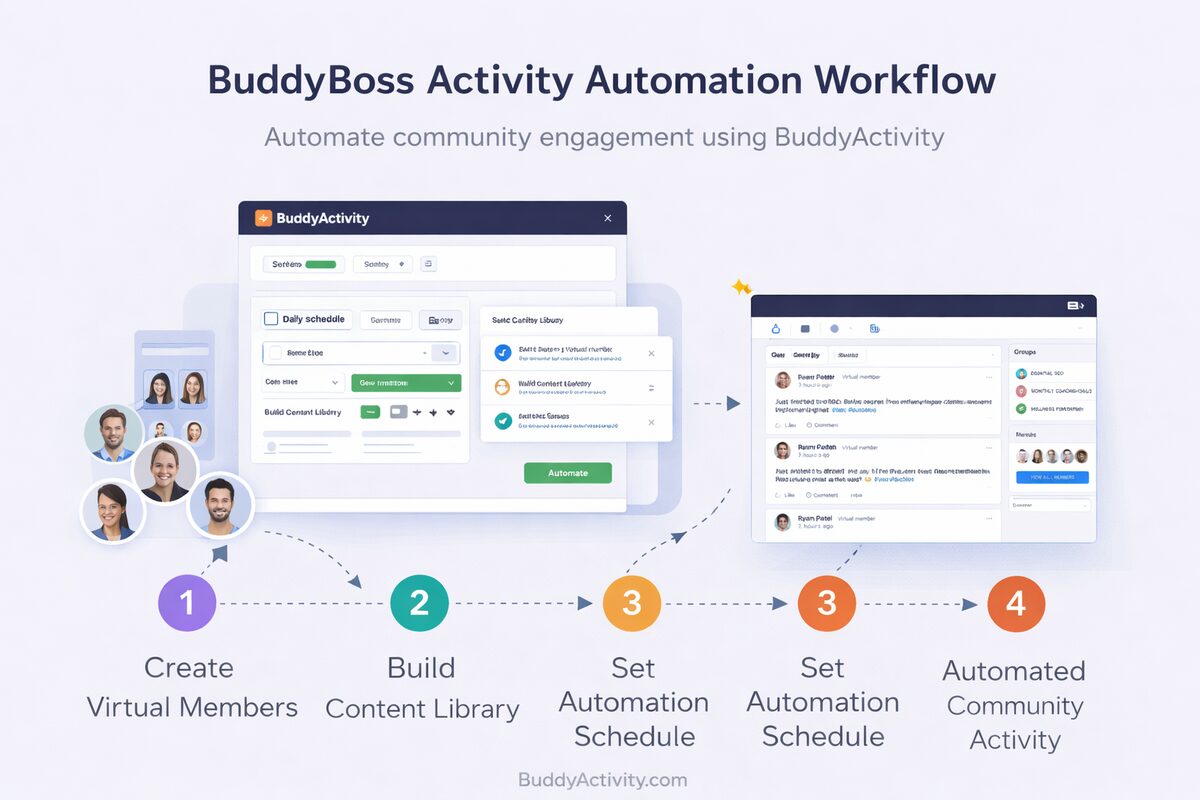
AI-Powered

AI-Powered Community Activity for BuddyPress and BuddyBoss

Generate complete discussion threads with AI content that follows realistic behavioral patterns, timing distribution, and persona-driven engagement logic -- not the flat, robotic feed every other tool produces.

Content-only, structure, or full thread
3 AI modes
Govern every AI output for realism
6 Engines
OpenAI, custom models, and templates
Multi-provider
AI-generated BuddyBoss community discussion thread with persona-driven replies

How AI Drives Community Activity

The AI layer in BuddyActivity is responsible for generating content and, optionally, entire conversation structures. It can create posts, comments, and replies based on prompts and contextual input. In full automation mode, it also decides how many comments and replies each post should receive.

The AI does not operate independently. It works in conjunction with the engine layer, which enforces behavior, timing, and distribution rules so AI-generated content follows realistic patterns rather than appearing robotic or random.

  • AI generates content; engines enforce realism
  • Three modes for full or partial automation
  • Validated through persona, engagement, and timing rules
  • Templates and prompts keep tone on-brand
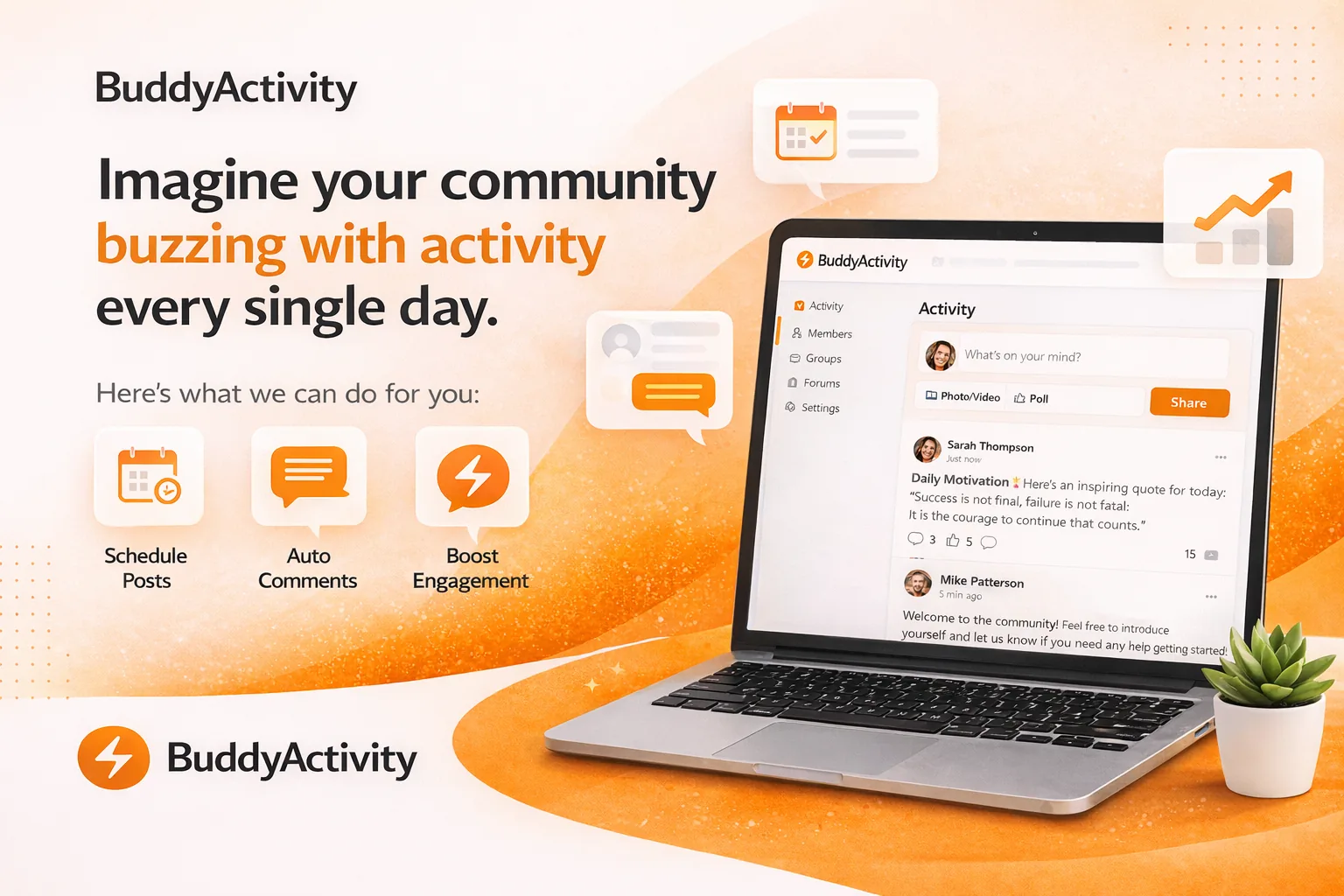
AI-driven community feed with realistic, distributed activity

AI + Engine Interaction Model

BuddyActivity follows a strict separation between AI and engine responsibilities. AI generates content and optionally defines conversation structure. The engine layer enforces behavior, timing, and distribution rules. This prevents unpredictable or unrealistic output while letting AI handle scale.

When AI generates a discussion thread, the Decision Logic Engine processes the output through the Persona, Engagement, and Timing engines. Each stage enriches the data with behavioral context, author assignments, and timing offsets before content is queued for execution.

Content Generation

AI generates posts, comments, and replies based on templates and contextual prompts.

Structure Generation

In full AI mode, the system determines how many comments and replies each post should receive.

Engine Validation

All AI output is validated and constrained by the engine layer for realism.

Template System

Templates guide AI output to maintain consistency across topics and discussion styles.

Provider Flexibility

Integrate with OpenAI and other major providers through a flexible prompt and template configuration.

Always-On Safety Net

If the AI output fails validation, the engine layer falls back to your template library.

Decision Logic Engine

The Decision Logic Engine is the mathematical and probabilistic backbone of the system. It defines how much activity to generate, how often, and under what conditions. Engagement mode, persona weights, and contextual signals drive comment counts, reply depth, participation probability, and interaction distribution.

In High engagement mode the system generates 7-15 comments per post. In Debate mode it produces a moderate comment count but with significantly deeper reply threads, creating realistic back-and-forth between personas with different viewpoints.

  • Low mode -- 1-3 comments, light reply depth
  • Medium mode -- 4-7 comments, balanced replies
  • High mode -- 7-15 comments, multiple sub-threads
  • Debate mode -- moderate comments, deep nesting
Decision Logic Engine flowchart showing AI output processed through engagement and timing engines
“I evaluated half a dozen AI engagement plugins and BuddyActivity is the only one that does not feel like ChatGPT spamming the same comment style on every post. The separation between AI content and engine timing is the missing piece nobody else got right.”
W
Wren Ozaki
Community Architect, Otis & Ohm

Content Generation Pipeline

After a post is created the system determines comment count based on engagement configuration or AI output. Each comment is assigned a unique author through persona-based weighted selection. Timing delays are applied so comments appear over realistic intervals. Everything is queued and executed through the scheduling system.

The reply generation process layers on top, evaluating each comment for reply potential based on persona reply probability and engagement mode. Replies form nested structures that simulate multi-level conversations with timing applied relative to the parent comment.

Frequently Asked Questions

Answers to the most common questions about AI-Powered.

BuddyActivity uses AI to generate posts, comments, and replies for BuddyPress and BuddyBoss communities based on templates and contextual prompts. The AI layer works under the constraints of the engine layer, which controls timing, author selection, and behavioral patterns. This ensures AI-generated content follows realistic human interaction patterns rather than appearing random or robotic.

BuddyActivity integrates with multiple AI providers for content generation including OpenAI and other major providers through a flexible template and prompt system. The AI handles content creation while the engine layer independently controls behavioral realism.

Yes. In full AI mode, the system generates complete threads including the initial post, multiple comments, and nested replies. The AI determines the conversation structure while the Decision Logic Engine calculates comment counts, reply depth, and participation distribution based on the selected engagement mode.

The engine layer enforces behavioral realism independently of AI content generation. The Timing Engine distributes activity over realistic intervals. The Author Selection Engine ensures diverse participation. The Persona Engine assigns different communication styles. And the Engagement Engine controls overall activity intensity to prevent artificial-looking engagement spikes.

Yes. Every AI mode is driven by templates and prompts you control. Tune tone, topic angle, and persona voice with template variables, and let the engine layer handle distribution, authorship, and timing.

Yes. Hybrid mode lets you write the strategic content yourself and have AI generate the comment-and-reply layer around it. Both flows pass through the same engine validation.

You can configure validation rules and fall back to your template library if a response fails them. Combined with prompt tuning and persona constraints, this keeps output safely on-brand.